
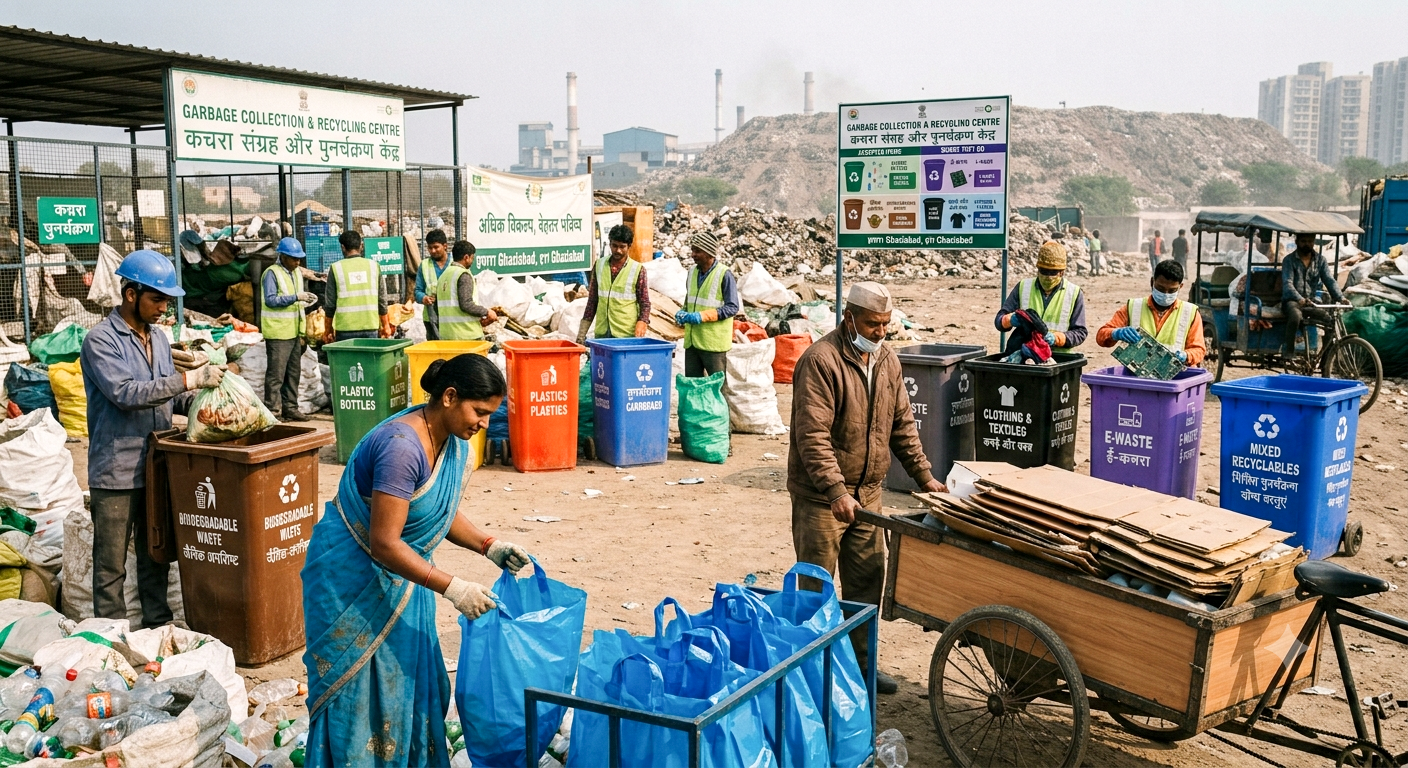
Waste Management: A Growing Concern
The ever-increasing population, growing demands and continuous shift in consumption pattern is a matter of concern globally. The stress on natural resources to meet these needs is yet another issue. However, with increasing consumption and thereby disposal of used items by people is also increasing day by day. The reason may be attributed to a number of factors: easy availability, affordability and lack of environmental concern among the public; and this is a global concern.
This has led to massive accumulation of waste with no clear and definite path to manage it effectively. Having said this, it does not mean that there are no efforts to control the situation in any part of the world. Different countries are taking measures in their own capacity to overcome the problem. The developed countries have well-defined systems of waste collection, segregation and recycling powered by sophisticated technologies like in Switzerland, Sweden, Germany etc.
Whereas in developing countries, these methods are still either in nascent or initial stages. Large populations, dense areas, increased consumption and neglecting segregation have further added to the crisis. Additionally, lack of appropriate technologies and funds shifted the major work to the informal sector who have their reach to almost all parts of a city or town or even villages forming a strong and accessible channel of waste collection.
What Constitutes the Informal Sector?
Informal sector, in simple words, is one which is not included in the main, formal or the organized workforce. According to WIEGO Statistical Brief (2020), home-based workers, domestic workers and street vendors in all the geographic areas are informal. In case of waste pickers, some of the workers are employed under formal activities also but even then, around three quarters or more are informal.
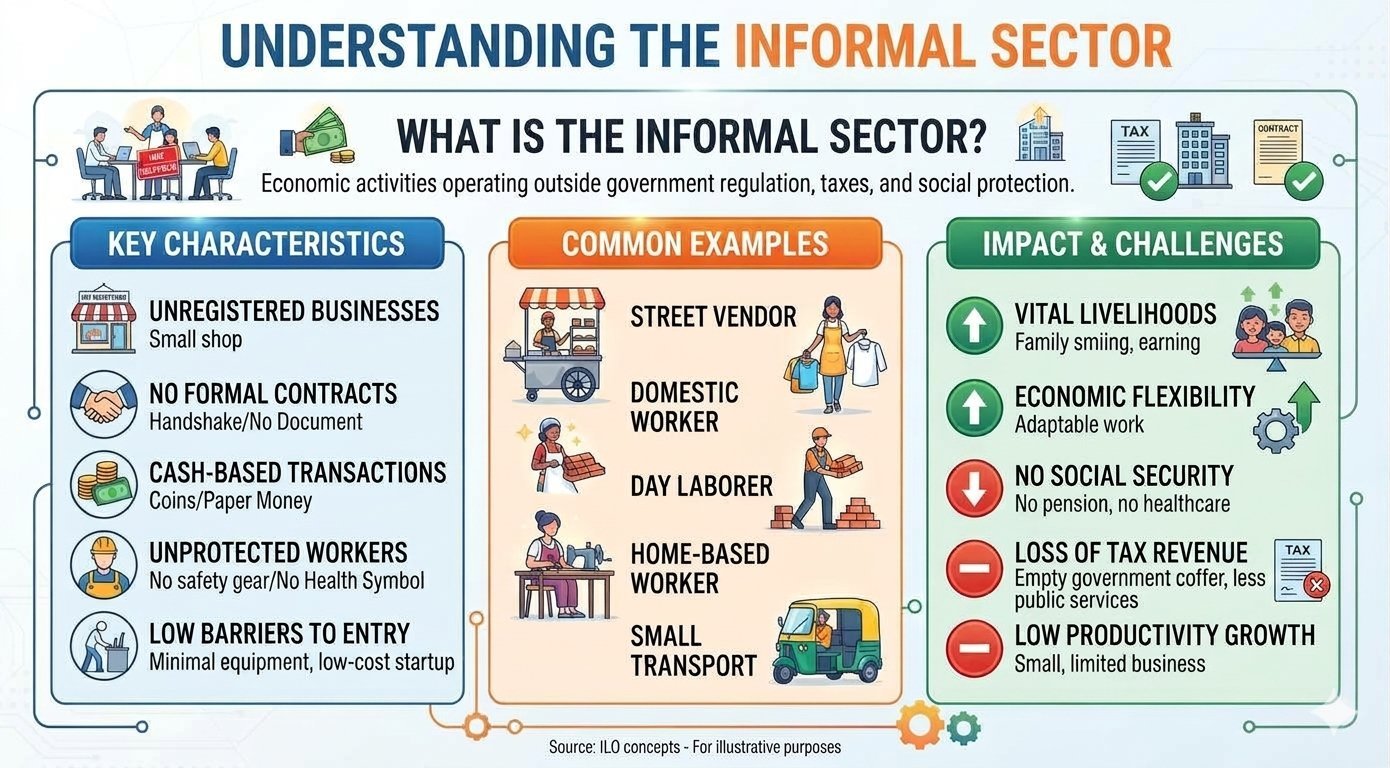
Moreover, it has to be noted that the existence of informal sector is not restricted to only developing countries. Though in varying percentages and depending on the kind of work area and manpower requirements, informal workers operate in developed countries also.
The sector is also widely mentioned as the ‘informal economy’ and is defined by different organisations. The International Monetary Fund (IMF) has defined informal economy as “activities that have market value and would add to tax revenue and GDP if they were recorded”. WIEGO on the other hand, describes the informal economy as “a diversified set of economic activities, enterprises, jobs and workers that are not regulated or protected by the state”.
Summarising, the sector or economy which is not covered under regulations and tax liabilities and the workers are not covered under state or government schemes is informal.
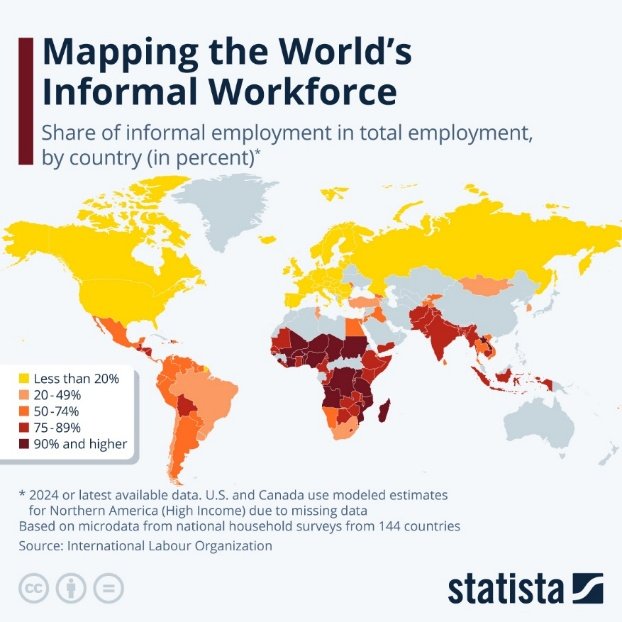
Figure 1 above indicates the presence of informal workers across the globe indicating that though in smaller percentages, informal workers can also be spotted in the developed countries particularly in the waste sector.
Informal Workers in the Waste Sector
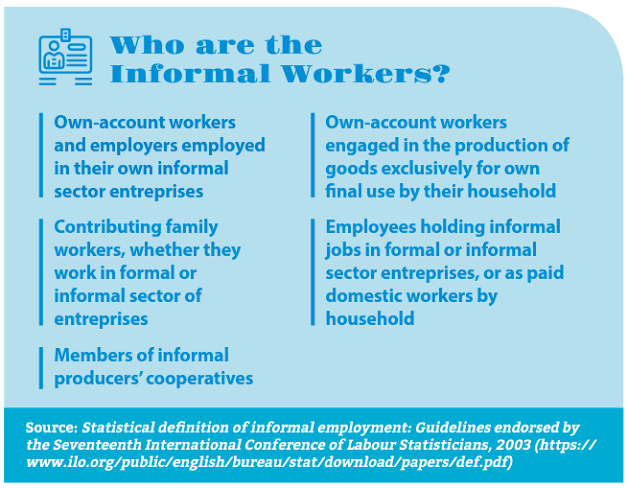
Globally, large quantities of waste are mostly managed by the informal sector (Wilson, Velis & Cheeseman, 2006). As per estimates, there are around 24 million waste workers globally and about 80 per cent of them are informal (Suss, 2023). Whereas in the Indian context, 98.04 per cent of female workers are informal and it was nearly 98% in 2010–15 (NSSO data). In urban areas also, the share of female informal workers was found to be higher than males at around 85% in 2016–20. The rural sector on the other hand contributes 78.23 per cent of informal workers to the workforce.
In solid waste management (SWM), informal recycling sector includes the waste collecting and processing activities of scavengers and waste/rag pickers. These terms are commonly used to describe the people involved in the collection and separation of recyclable and reusable materials from mixed waste. The informal waste sector is labour-intensive, requires low-technology, is under-paid, unrecorded and unregulated work, often completed by individuals or family groups (Wilson, Velis & Cheeseman, 2006).
Some organisations can form micro and small enterprises (MSEs) which involves groups of up to 10 (micro), or 20 (small) people and operate with low capital investment. They collect the waste materials and process those into intermediate or final products, using their creativity and innovation and thus they respond to market needs cost effectively (Ahmed & Ali, 2004).
Thus, these informal waste workers play an important role in closing the gap in waste management through recovery of materials, segregation, collection of recyclables from landfills, street garbage points, and bins. According to an estimate (Chen, 2023), the informal waste workers collect around 59% of all the plastic material discarded globally. By preventing the leakage of plastic waste to the environment, they help to protect other people’s health and the environment and also contribute in bringing the discarded waste back into the economy.
Challenges Faced by Informal Waste Workers
However, despite their substantial contribution, they are hardly recognized for their role and are looked down upon (UNDP). These workers operate under highly unsafe conditions. They often use bare hands to pick waste from bins or dumps and without any basic safety and protective gear, physical injuries, respirational problems and skin related issues are very common.
Moreover, when the waste contains harmful chemicals, these workers face the risk of contracting infectious diseases and even severe long-term diseases such as cancer (Badal et al, 2025; Chen, 2023; Zolnikov et al, 2021). Training these workers on safety and providing them with basic protection equipment such as gloves, masks and shoes can help to be safe while at work. In addition to these, they also face discrimination and are looked down upon by the community due to working with waste.
Inclusion: The Acceptance of Informal Workers in the Mainstream
As the work and contribution of these informal waste workers is now being recognised by the authorities, organisations and some parts of the society, efforts are being made to include them in the mainstream waste practices.
For instance, in Bogotá, Colombia, the waste pickers were legally recognised as formal service providers in the recycling system of the city. The city of Buenos Aires (Argentina) has also hired 12 waste picker cooperatives since 2012, and thus employed more than 6,500 people to recycle, educate the public about environmental issues as well as recover 400 tonnes of recyclables each day (Sarkar, 2025).
In India, organisations like SEWA, Chintan, Swachha, Alliance of Indian Waste Pickers, Kagad Kach Patra Kashtakari Panchayat (KKPKP), Hasirudala and many others have come forward and support these workers to understand their safety and work with dignity.
The concept of circular economy connects these workers by recognising the works like repair, refurbishments, waste to worth — promoting formation of SHGs to bring waste materials to life again and many more activities. The steps are being taken but much more needs to be done for them.
In developing countries particularly, these informal workers form the backbone of waste management and giving them due recognition by words, actions and also policies will encourage them earn their livelihood with dignity.
Upcoming Article: Women in Informal Waste Sector