
With climate itself becoming an unreliable partner, agriculture today faces problems no generation has faced quite like this. Rising demands for productivity, paired with losses due to environmental stresses, have pushed researchers toward drought and pest-resistant crops, precision irrigation, and bio-engineered fertilizers and pesticides as necessary tools rather than optional upgrades. As a result, researchers and farmers worldwide are focusing on two things: better crops, and smarter ways to grow them.
Breeding Smarter, Not Just Harder
One of the strongest ways to protect crops from climate stress starts with the seed itself. Modern plant breeding gives scientists several tools to develop stronger crops. They can use DNA markers to quickly find plants with useful traits, use genetic information to predict which plants are likely to perform well, grow several generations quickly under controlled conditions, and even make precise changes to a plant's DNA using CRISPR gene editing. Together, these approaches can help crops such as rice, wheat, and maize better cope with extreme heat, water shortages, poor soils, and changing pests.
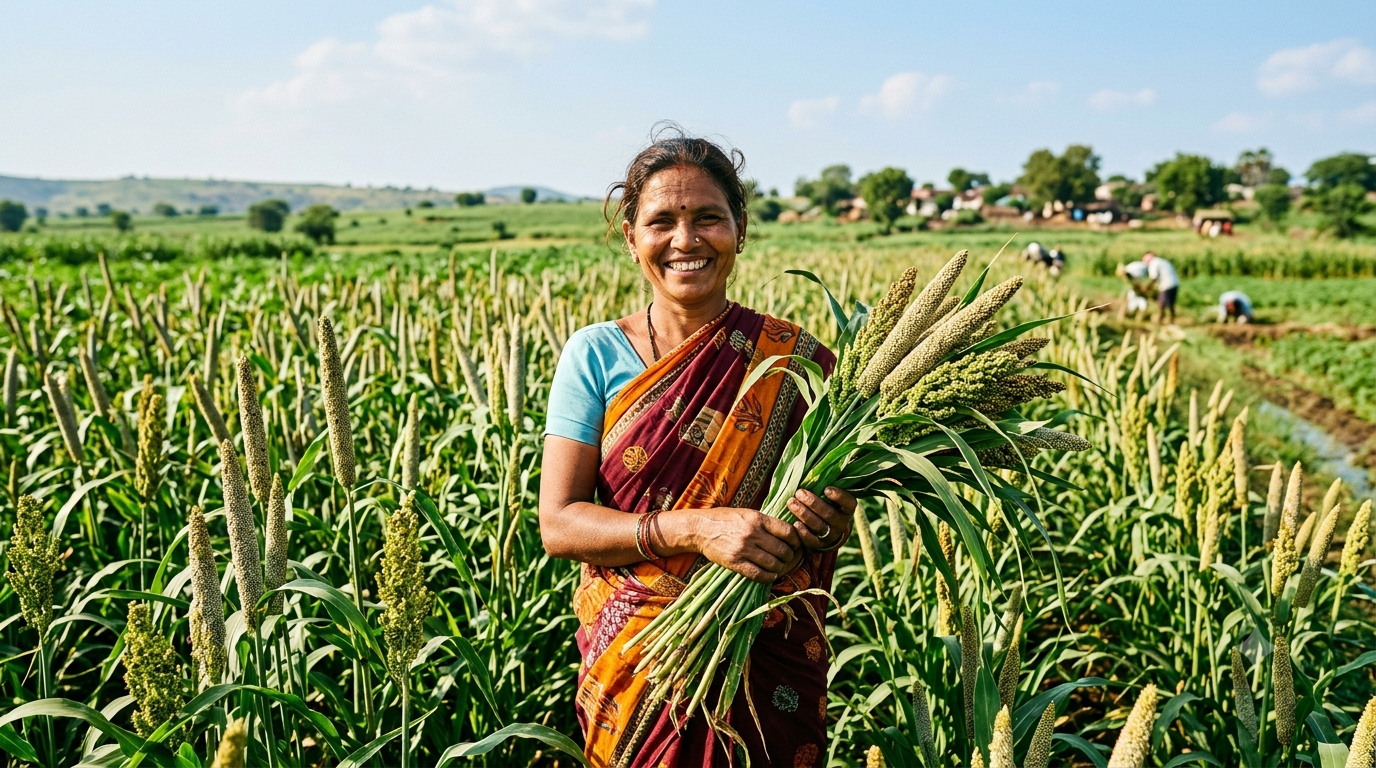
But the answer does not always have to come from new technology. Researchers are also looking again at traditional crops that naturally grow well in difficult conditions. In dry regions, for example, combining water-saving farming methods with hardy crops such as sorghum, cowpeas, and millets has greatly increased harvests. In some trials in Zimbabwe and Kenya, yields rose from just a few hundred kilograms per hectare to several times that amount.
What Happens Below the Surface Matters Too!
Making crops stronger is not just about improving their genes. The soil they grow in and the tiny organisms living around their roots can also help plants get nutrients and cope with drought, heat, and other stresses. Scientists are therefore exploring ways to improve this natural partnership between plants, soil, and microbes.
Simple farming practices can help too. Methods that disturb the soil less, such as strip tillage, can keep the soil cooler, improve its structure, and reduce greenhouse gas emissions without sacrificing crop yields. Farmers can also capture and store rainwater more effectively and use materials such as biochar to help the soil hold water for longer. Together, these approaches can give crops a better chance of making it through dry periods when the rains fail.
Stronger Crops, Better Nutrition
Some of the most promising solutions can tackle two problems at the same time. For example, new wheat varieties with higher levels of zinc can produce good harvests while also providing better nutrition. Importantly, the extra nutrition does not come at the cost of lower yields. This means farmers can grow crops that are better suited to challenging conditions while also helping improve diets — an especially important benefit in regions where nutritious food is already limited.
The Part Science Alone Can’t Fix!
None of this works if it doesn’t reach the farmer. Whether a farmer actually adopts a climate-resilient variety depends less on the seed and more on access to extension services, education, input availability, and household economic standing. And that access is not evenly distributed: more than half of the relevant studies found that sex, age, and marital status shaped who adopted these crops at all — meaning women, who do much of the world’s informal farm labor, are often furthest from the systems designed to deliver these innovations.
Where This Leaves Agriculture
Climate-resilient agriculture is not a single invention waiting to be discovered — it’s a layered response spanning genetics, soil science, nutrition, and social systems. Governments drafting policy support for climate-smart practices is now seen as essential to making these gains reach smallholder farmers at scale. Science is advancing quickly. The harder, slower work is making sure it reaches everyone who needs it — not just the farmers already positioned to receive it.
Dr Prachi Pandey is volunteering with RIDF as a Technical Writer & Subject Matter Expert contributing her views and articles on agricultural practices and its social impact.